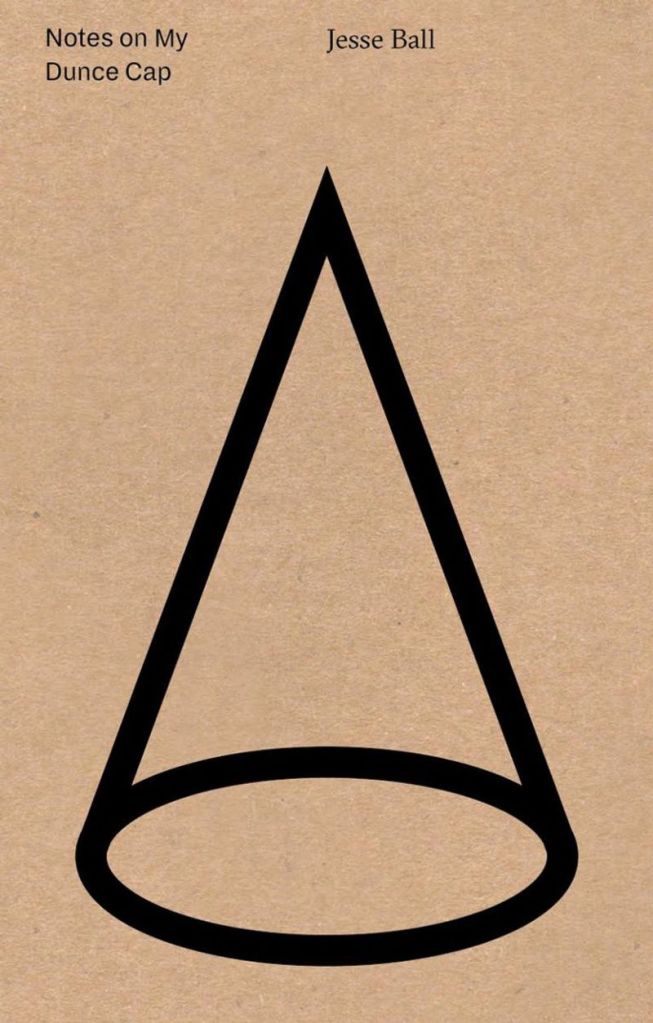
“The principal danger of the classroom is its implicit hierarchy. Dangerous to whom? To every last one. Hierarchy contorts and diminishes the possibilities of the lives that labor within it. The teacher should at all times refuse authority. But then—how can one tell which one in the class is the teacher? How can a student know to whom to go with their troubles? The teacher should through word and action demonstrate an understanding. That understanding is the entirety of the authority that they may have, and it is simply this: that one can expect similar words, similar actions.” —Jesse Ball, Notes on My Dunce Cap
“The fact that our language itself is tainted by the quality of our society means that in teaching we need to be acutely conscious of the kind of tool we want our students to have available, to understand how it has been used against them, and to do all we can to insure that language will not someday be used by them to keep others silent and powerless.” —Adrienne Rich, “Teaching Language in Open Admissions”
Graduate Course
- Graduate Poetry Workshop (Stephen F. Austin State University, 2026)
Undergraduate Courses
- Advanced Poetry Workshop (SFA, 2026) (in Spring 2026, as Artistic Process and Ekphrastic Community, a collaborative class and gallery exhibit with expressive drawing students)
- Intermediate Poetry Workshop (SFA, 2025–2026; Texas Tech University, 2023–2024)
- Beginning Poetry Workshop (University of Washington, 2018)
- Introduction to Creative Writing (multi-genre workshop) (SFA, 2025–2026; TTU, 2021–2024)
- Introduction to Poetry (literature) (TTU, 2022–2023)
- Research and Argument (TTU, 2021)
- Rhetoric and Composition (SFA, 2025–2026; TTU, 2020; UW, 2017–2019)
High School Enrichment
- Beginning and Intermediate Poetry Writing, TTU Upward Bound Summer Academy (as Creative Writing Lecturer), Summer 2023
- Taught 3 sections of poetry writing in a monthlong summer institute focused on college preparedness for low-income and first-generation high school students. Students completed the course by making their own poetry broadsides.
Selected Course Descriptions
(Click each title to expand)
Graduate Poetry Workshop
In this class, we will learn and practice poetic techniques with a focus on fundamentals: imagery and metaphor; who speaks and who’s addressed; sentence, line, and stanza structure; sound, rhythm, and meter; word choice; and so on. We’ll work through these fundamentals through Paisley Rekdal’s practice of “forensic” reading and writing, a way of considering poems systematically and intentionally as we gain facility and comfort with their craft elements. But we’ll also keep a thought from Charles Wright in mind: “Pure technique,” he writes, “is the spider’s web without the spider—it glitters and catches but doesn’t kill.” The last thing we want to make are poems that are “competent” in the derogatory sense—as in only competent, perfectly well-constructed armatures with no tender animal inside. We’ll think throughout the semester about how to invest our poetic work with heart and thought as well as competence: to be honest on the page, to find our poetic subjects, and to craft poems with the kairotic urgency of something to say that must be shared here and now (that is, in the permanent now of the poem).
Our readings for class, in addition to Rekdal’s craft text, consist of a collection of contemporary poetry collections that might be termed “project” books: that is, each book has some kind of centering focus or arc. We’ll read each not only to practice our understanding of the poetic techniques we’re refining and our developing or deepening poetic voices, but also to consider what makes a book or collection of poems. Our culminating assignment for this class will be a chapbook, a short manuscript of your poems considered as a project and arranged with intention and purpose.
Selected readings: Paisley Rekdal, Real Toads, Imaginary Gardens: On Reading and Writing Poetry Forensically (W. W. Norton, 2024); Rick Barot, Chord (Sarabande Books, 2015); Catherine Barnett, Human Hours (Graywolf Press, 2018); Kiki Petrosino, White Blood: A Lyric of Virginia (Sarabande Books, 2020); Victoria Chang, Obit (Copper Canyon Press, 2020); Jennifer Loyd, Ghost in the Archive (Conduit Books & Ephemera, 2025); Erin L. McCoy, Wrecks (Noemi Press, 2025); Maurice Manning, Bucolics (Ecco, 2008).
Advanced Poetry Workshop: Artistic Process & Ekphrastic Community
In this class, we will investigate advanced poetry techniques, like meter, the poetic line, syntax in relationship with the line, organic form, and tension. We’ll also explore our lives as artists and the practice of ekphrasis, or writing about other works of art; these threads will be invigorated by our reading, our looking, and a semester-long collaboration with the members of an Expressive Drawing class.
As we consider our individual relationships with ekphrasis itself and with the artists and artworks we write about, around, and “for” (to borrow critic Stephen Cheeke’s preposition), I’d like us to keep two key concepts in mind. The first is from Danielle Dutton, who distinguishes a tension between two “impulses” she identifies in ekphrastic writing: “art’s ability to make strange what has grown familiar and translation’s desire to make recognizable the experience of one artwork inside the space of another.” Essentially, we must be conscious of the need to preserve both. We recognize and honor art’s inherent otherness; we also pull it closer. The second concept I want to highlight is simply the practice of attention. It is a central tenet of this class that close, careful attention doesn’t only register what we attend to: it alters it, alters us, and alters what we’re capable of making. It’s a simultaneous process of increase or broadening—“Objects of my attention / made more of me,” writes Karen Solie—and, in Elaine Scarry’s words, a “radical decentering” of ego. This kind of attention is very close to love. So, in summary: The work of this class will require abundant attention and abundant tolerance for complexity.
Together, we will read ekphrastic poems, make poems based on artworks, collaborate with art students to construct a gallery exhibit, examine our poetic processes and habits of engagement and attention, and do all the good daily work of poetry. The class will culminate in chapbooks of our own poems.
This course requires time, patience, practice, and dedication to others’ art as well as your own. I won’t ask you to do anything I don’t believe you can tackle, but I have a very high opinion of you! I don’t intend anything to be difficult in ways that don’t help you grow as a poet, but I do intend to do hard work together. This work will be most suitable and enjoyable for those who are dedicated to a creative life.
Selected readings: various ekphrastic poems; Diane Seuss, Still Life with Two Dead Peacocks and a Girl (Graywolf Press, 2018); Natasha Trethewey, Thrall (Ecco, 2015); Mark Doty, Still Life with Oysters and Lemon (Beacon Press, 2001).
Intermediate Poetry Workshop
In this class, we’ll focus on the reading and writing of lyric poetry. Our organizing principle will be the idea, shared by many poets, that poetry is not an inert art form but an endlessly renewable experience dependent on the reader’s attention, care, and time. Though you may have learned previously that poems are like riddles, puzzles, or mazes—all metaphors that imply a single answer, and often a single path to that answer—this course will encourage you to engage with poems much as you would take a walk (a metaphor the poet A. R. Ammons proposed) or get to know a person. Just as you wouldn’t attempt to sum up another person in one sentence or meaning, we won’t approach the poems we read as problems to “solve” or translate into ordinary prose. Our goal is to approach the poems we ourselves write with the same nuance and respect for complexity.
This course will balance reading and writing, much as they should be balanced in a healthy writing practice. Throughout the semester, you will complete frequent low-stakes assignments, such as reading journals and poetry exercises, that support an engaged writing and reading life. You will also complete larger assignments—like more polished poems for workshop, a book presentation with creative components, and a final chapbook of your own writing with an accompanying artist letter—that express your identity as a poet.
Selected readings from various iterations: Individual poems from over 100 different poets; Leila Chatti, Deluge (Copper Canyon Press, 2020); Natalie Shapero, Popular Longing (Copper Canyon Press, 2021); Ross Gay, Catalog of Unabashed Gratitude (University of Pittsburgh Press, 2015); Tracy K. Smith (ed.), American Journal: Fifty Poems for Our Time (Graywolf Press, 2018); Matthew Zapruder, Why Poetry (Ecco, 2017).
Introduction to Creative Writing
This course is focused on the reading, writing, revision of poetry, short fiction, and essays. We’ll focus on poetry for the first half of the semester and both prose genres together during the second half. By becoming alert, attentive readers of these genres and literature at large, we become more active, responsible, and empathetic readers of reality. Poetry, stories, and essays provide not just entertainment or solace—though we do find these, of course—but in fact a way of aligning how we interpret and relate to our common humanity and the world around us. We return from them altered, both more ourselves and differently so.
The daily work of our class will consist of reading, discussion, writing exercises, and workshopping, all in the service of understanding the ways creative writing can work—its particular magic. One major difference between this class and a literature course is that our work will focus on reading as writers, not only as critics and students of literature. This means that we will use literary texts to help us better understand the practice of our craft, and we’ll pay special attention to how each poem or story is able to spark an event or experience for readers.
Selected readings from various iterations: Poems by Robert Hayden, Li-Young Lee, Paige Lewis, Sylvia Plath, Robert Hass, Seamus Heaney, Jasmine Khaliq, Angel Nafis, Sharon Olds, Elizabeth Bishop, Layli Long Soldier, Ruth Stone, Lucie Brock-Broido, and Victoria Chang; essays by Joan Didion, Alexander Chee, Annie Dillard, Patricia Hampl, Claudia Rankine, Eula Biss, Sarah Minor, Leanne Shapton, Jericho Parms, Lily Hoang, and Lydia Davis; fiction by Jamaica Kincaid, Lucia Berlin, Denis Johnson, George Saunders, Fabio Morábito, and Lucy Corin.
A Few Favorite Books on Teaching
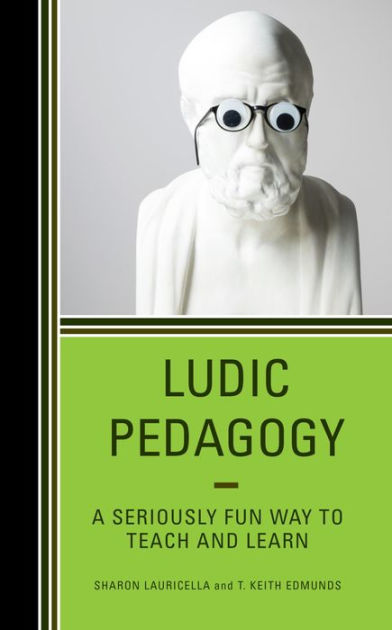
- Sharon Lauricella and T. Keith Edmunds, Ludic Pedagogy: A Seriously Fun Way to Teach and Learn (Rowman & Littlefield, 2023)
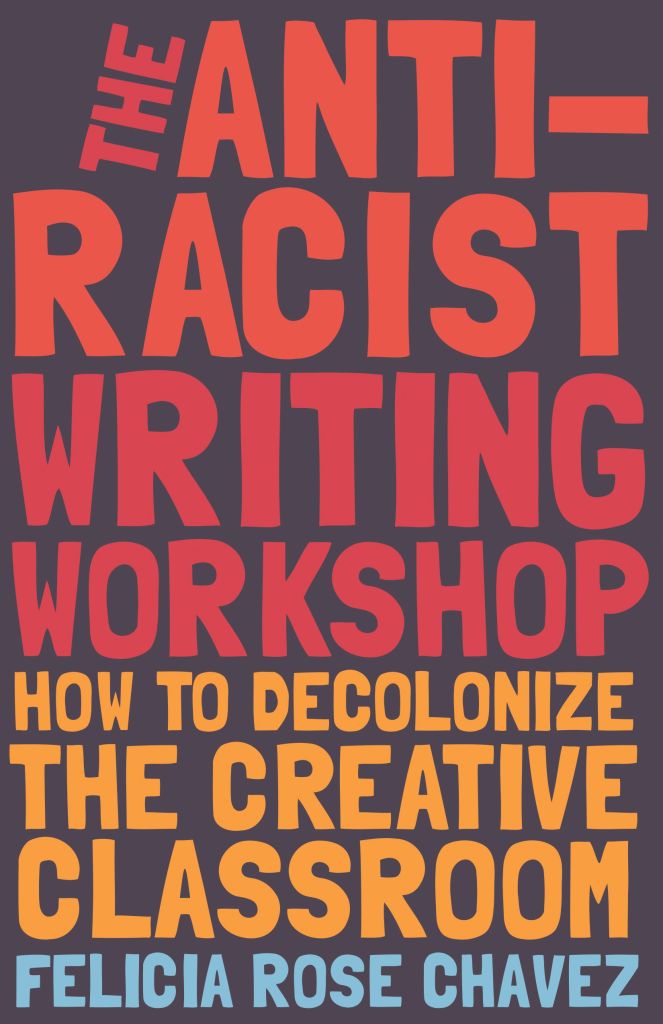
- Felicia Rose Chavez, The Anti-Racist Writing Workshop: How to Decolonize the Creative Classroom (Haymarket Books, 2021)
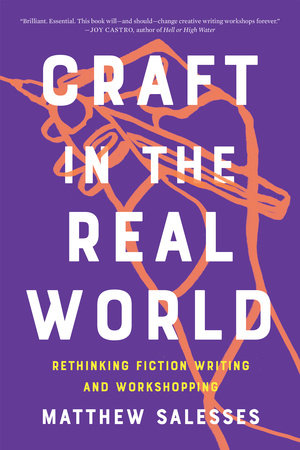
- Matthew Salesses, Craft in the Real World: Rethinking Fiction Writing and Workshopping (Catapult, 2021)
- Jesse Ball, Notes on My Dunce Cap (Pioneer Works, 2016)
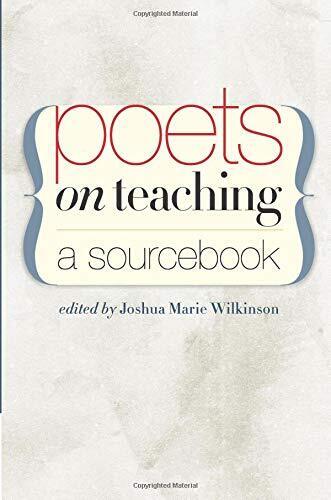
- Joshua Marie Wilkinson (ed.), Poets on Teaching: A Sourcebook (University of Iowa Press, 2010)
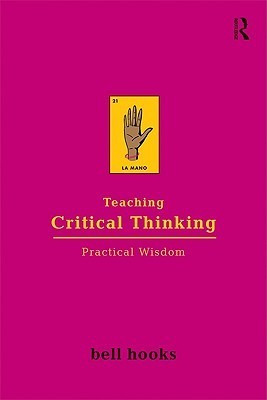
- bell hooks, Teaching Critical Thinking: Practical Wisdom (Routledge, 2009)
 Emma Aylor